EN



One Kit per Cylinder: Standardising Hydraulic Cylinder Seal Kits for Excavator Repair
A 20-tonne excavator with a drifting boom isn't a machine with a worn part. It's a machine that can't be rented, can't hold a grade, and can't be scheduled. The seal that causes it costs less than a bucket tooth.
This note is for hydraulic repair workshops, equipment dealers and rental fleets in North America who are trying to stop rebuilding the same cylinder every 18 months. It sets out the failure sequence, the material decisions behind a hydraulic cylinder seal kit, and how kit standardisation changes the economics of a repair bench.
1. Start with the cost of the symptom, not the price of the part
Industry downtime benchmarks are blunt but useful. Siemens' True Cost of Downtime 2024 put unplanned downtime at roughly 11 % of revenue across the Fortune Global 500 — about USD 1.4 trillion a year. A repair shop doesn't operate at that scale, but the logic scales down cleanly:
| Input | Where it comes from |
|---|---|
| Machine day rate or rental revenue lost | The fleet's own rate card |
| Hours from failure to back on site | Workshop log: teardown, parts wait, reassembly, testing |
| Parts wait | The variable you actually control |
In most rebuild jobs the parts wait dominates, and it dominates because the seal kit is ordered after teardown, size by size, from three different suppliers. Standardising the kit attacks the only input the workshop controls.
2. The failure sequence nobody sees
A cylinder doesn't fail in one step. It fails in five, and each one points at a different component. Which is why an excavator seal kit is specified from the failure sequence backwards, not from a parts explosion: a cylinder repair kit that arrives complete but in the wrong order still costs a day.
| Stage | What happens | Component under suspicion |
|---|---|---|
| 1 | Fine dust passes the wiper and beds into the rod seal lip | Wiper (dust scraper) |
| 2 | Abrasive paste grinds the rod seal lip; a film of oil appears on the rod | Rod seal |
| 3 | Oil escapes, pressure drops, the operator compensates with more flow | Rod seal, then pump |
| 4 | Piston seal loses preload; the boom drifts under load ("arm drop") | Piston seal, wear rings |
| 5 | Metal-to-metal contact scores the bore; the cylinder is now a machining job, not a seal job | Wear rings, tube |
Stage 5 is where a USD 40 kit becomes a USD 4,000 cylinder. The wiper is the cheapest part in the assembly and the one that decides whether the other four survive.
3. Material decisions, and where PU is the wrong answer
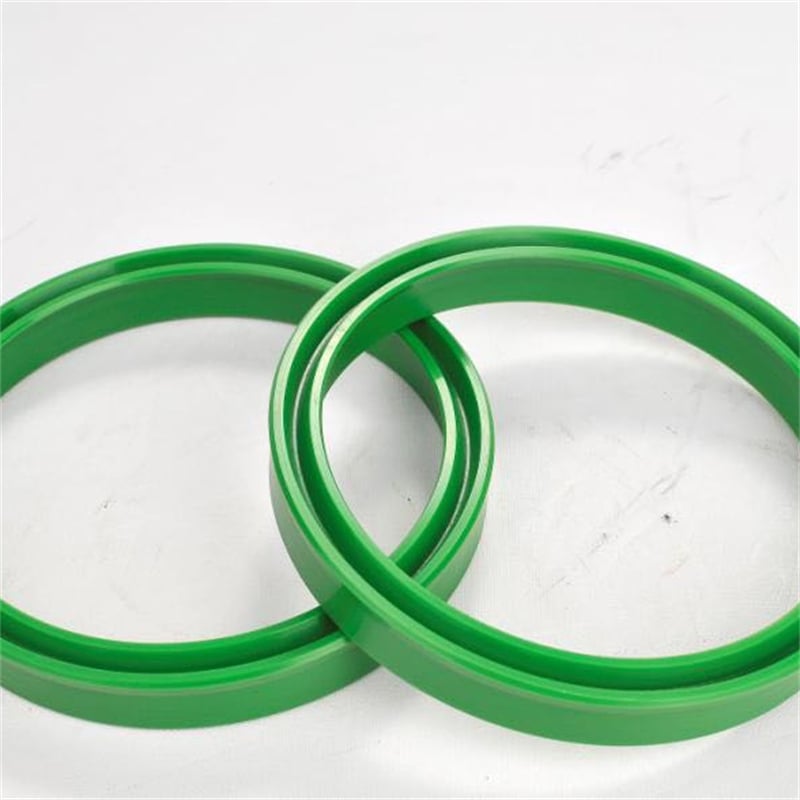
For mobile hydraulic cylinders in the −20 °C to +120 °C window, polyurethane is the default inside a cylinder seal kit for piston seals, rod seals and wipers: high abrasion resistance, high extrusion resistance, and it holds up under shock loads far better than NBR.
But "PU for everything" is a shortcut that fails in specific conditions, and a supplier who doesn't raise this isn't worth auditing:
-
Water-based and water-glycol fluids. Polyester-type PU hydrolyses in warm water-bearing fluids. If the fleet runs water-glycol, the seal faces need a different compound, not a harder one.
-
High-frequency low-amplitude cycling. Small strokes with high cycle counts generate heat at the lip and starve it of oil film. A harder PU doesn't fix this; a different lip geometry and a PTFE-filled solution does.
-
Extreme cold start. Below −20 °C the PU lip stiffens and can skive on start-up. For cold-climate fleets this is a specification issue, not a maintenance issue.
-
Aggressive external environment. Quarry and demolition duty needs a reinforced wiper, sometimes a double wiper, and a rod that is actually straight.
The kit we build for a standard excavator cylinder therefore mixes materials rather than standardising on one:
| Position | Material | Reason |
|---|---|---|
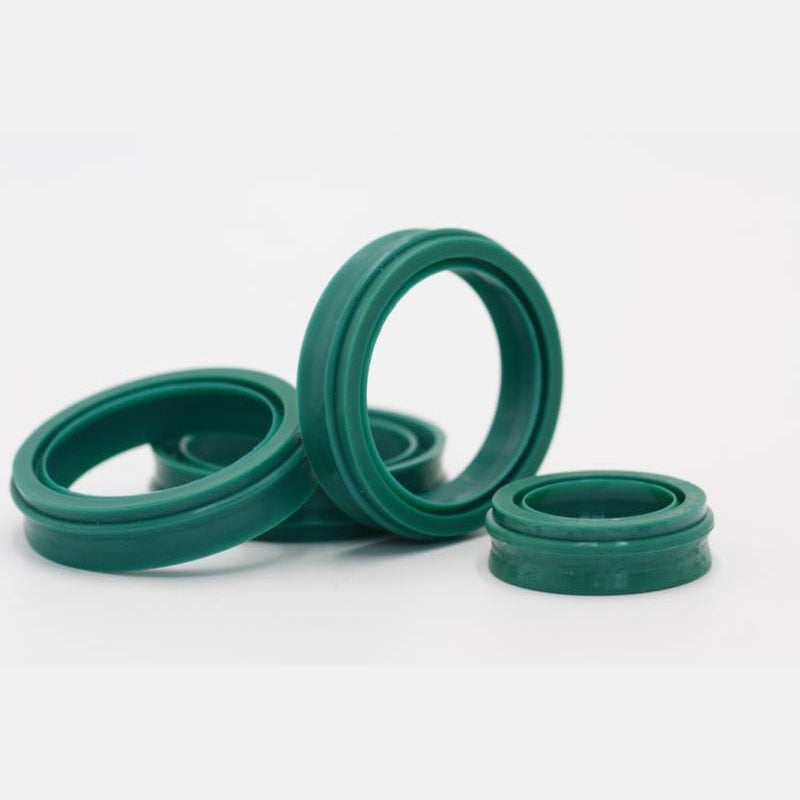
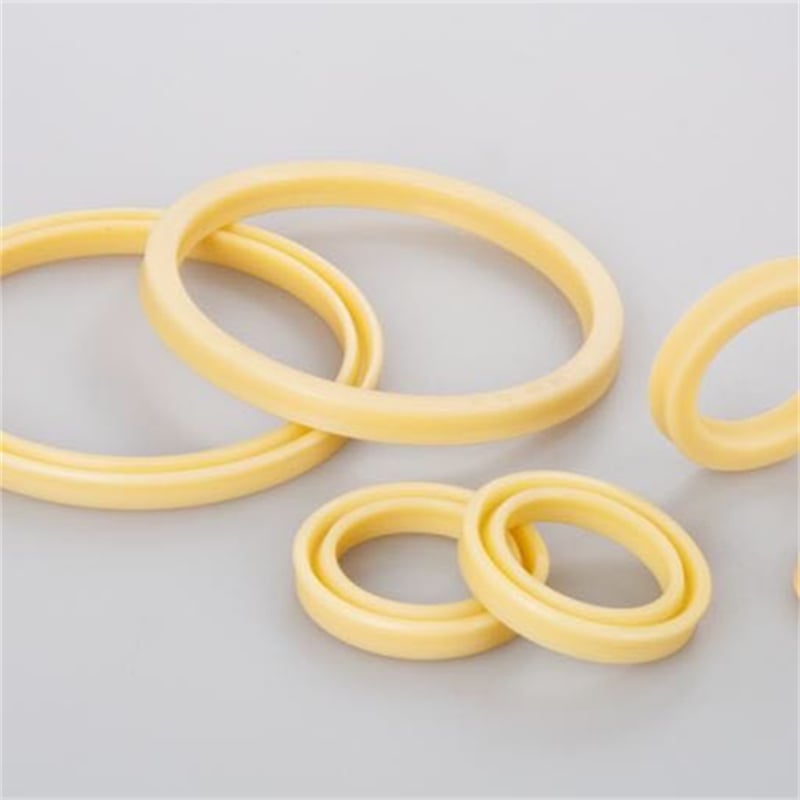
| Piston seal | PU (DHS / UN / UHS profile family) | Pressure and shock load |
| Rod seal | PU, with PTFE option for high cycle | Lip recovery and low friction |
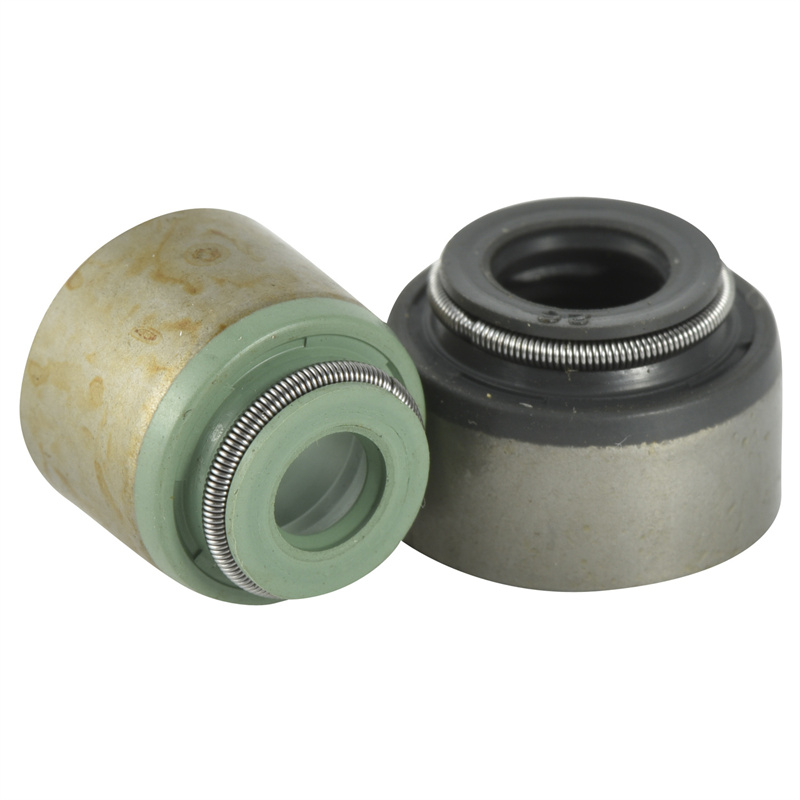
| Wiper / dust scraper | PU or NBR depending on abrasion level | External contamination is the primary threat |
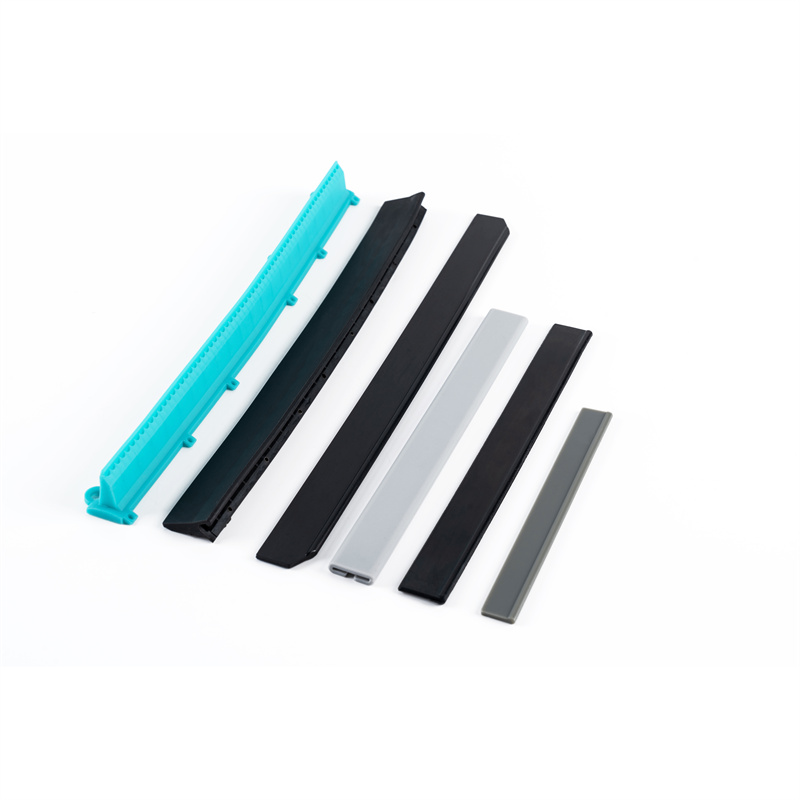
| Wear ring / guide | PTFE-filled or fabric-reinforced phenolic | Prevents metal-to-metal contact |
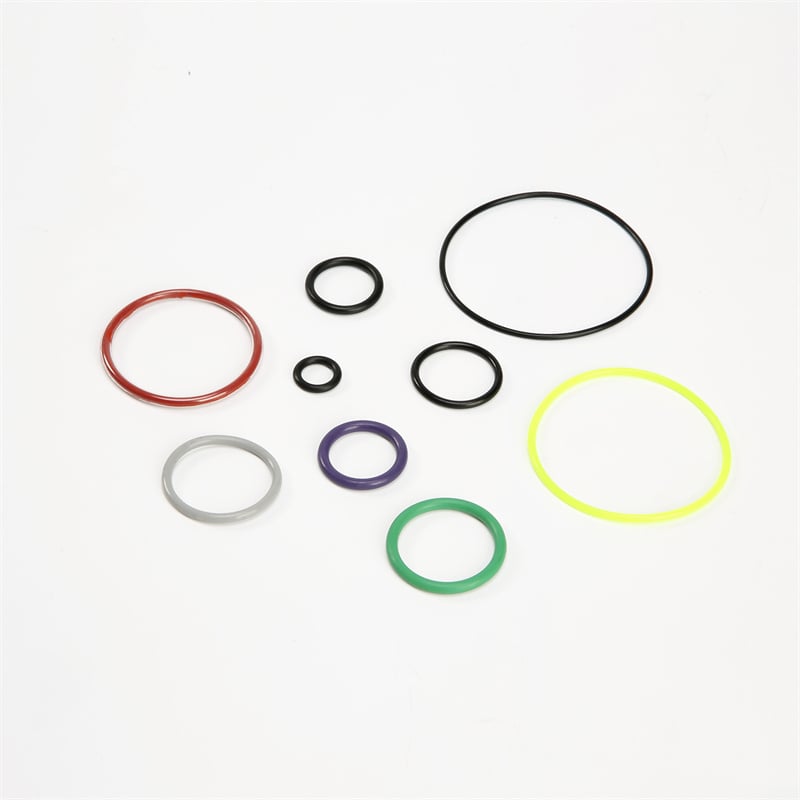
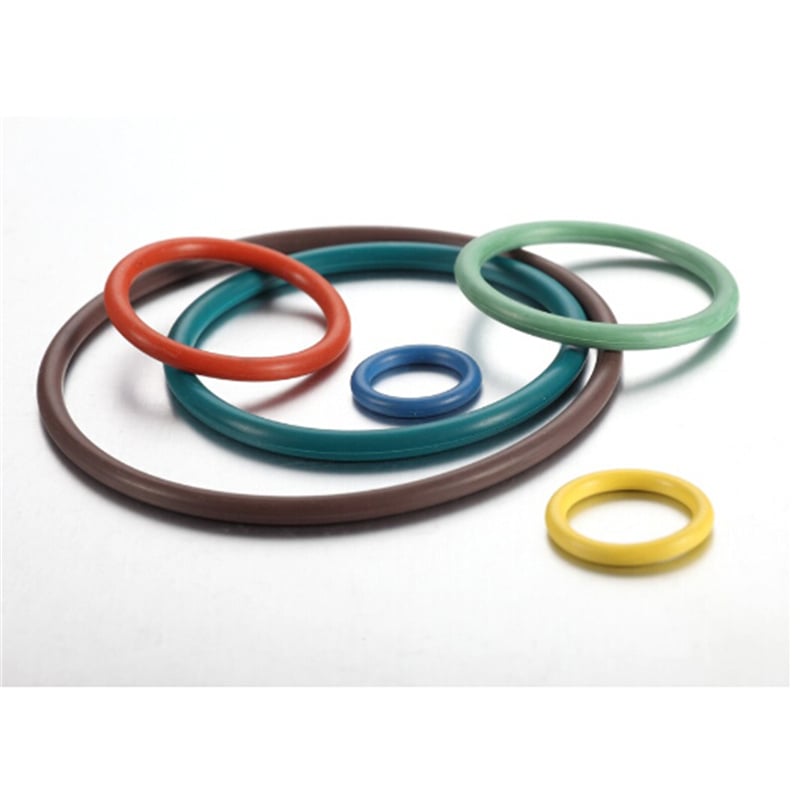
| Static O-rings | NBR 70 Shore A | Standard static sealing |
| Backup rings | POM or PTFE | Anti-extrusion at pressure spikes |
Available profile families include DHS, UN, UHS, KDA, KDAS and UNP, in standard and custom sizes.
4. What kit standardisation actually changes
The workshop's problem wasn't a missing seal. It was that five machine models, three cylinder types and two aftermarket catalogues produced 40-odd line items, each ordered separately. A hydraulic cylinder seal kit is a specification, not a bag of parts.
What we changed:
-
One part number per cylinder, not per seal. Each hydraulic cylinder seal kit is defined by machine model, cylinder position (boom / arm / bucket / stabiliser) and rod diameter. The bench orders one number.
-
Kits packed in assembly order. Parts are bagged in the sequence they are installed, with position labels. This removes the "which O-ring goes where" step that consumes 20–30 minutes per rebuild and produces most assembly errors.
-
Sample-based reverse engineering. Where the OEM part number is discontinued or the cylinder has been re-chromed to a non-standard size, we measure from the failed parts and the rod, then cut a new tool in our own mould department. Our toolroom already holds more than 7,000 oil seal sizes, which shortens the dimensional cross-reference step.
-
Material callout on the bag. Each bag states compound and hardness, so the next rebuild doesn't silently swap a PU rod seal for an NBR one from the generic bin.
-
Replenishment, not project ordering. Repeat kits ship in 15–20 days; the workshop holds two kits per high-utilisation machine instead of a shelf of loose seals.
5. Tolerances and inspection
A hydraulic seal kit is a tolerance product, not a catalogue item. The checks that matter:
| Check | Method | Note |
|---|---|---|
| Lip geometry and concentricity | Optical projector / profile measurement | The lip is the functional surface; a 0.1 mm deviation changes leakage behaviour |
| Hardness | Shore A / Shore D per compound | Recorded per lot, not per shipment |
| Cross-section and ID/OD | Caliper and projector, per drawing | Wear ring flatness checked separately |
| Flash and parting-line condition | Visual, 100 % | Flash on a lip is a leak path |
| Compound verification | Rheometer curves at mixing, retained per batch | Ties the part back to the compound batch |
Static O-rings in the kit follow AS568 dimensions where the cylinder uses inch-based glands, which matters for US fleets buying from imperial drawings.
6. Commercial terms
-
Kit definition: every hydraulic seal kit is built to a written parts list showing position, profile, compound and hardness, so a reorder can't drift.
-
MOQ: from USD 150 per size — a single kit is viable, which is the point.
-
Lead time: 15–20 days on repeat kits; up to 30 days in the summer high-temperature period.
-
Samples: free once an order is confirmed, freight covered.
-
Tooling: in-house mould department and CNC workshop; a resized wear ring or a new wiper profile doesn't wait for an external toolroom.
-
OEM/ODM: private-label bags and kit numbering supported for distributors.
7. The calculation to run before the next rebuild
Fill this with the workshop's own rate card rather than an industry average:
| Line | Formula | What it measures |
|---|---|---|
| A | Machine revenue or rental rate per day | The cost of one lost machine-day |
| B | Days lost per rebuild — teardown, parts wait, reassembly, testing | Exposure per event |
| C | A × B | Cost of lost availability per rebuild |
| D | Kit cost + labour | The number purchasing usually compares |
| E | Rebuild interval, before and after standardisation | Whether the frequency changed |
The decision usually turns on line E, not line D. A kit that costs 30 % more but moves the rebuild interval from 18 to 30 months pays back in the first avoided teardown.
8. Outcome
Structural changes we can state without inventing numbers:
-
Kit definition moved from "seal by seal" to "one number per cylinder position", which removed the post-teardown parts-wait from the critical path.
-
Assembly-order packing eliminated the position-identification step at the bench.
-
Compound and hardness marked on every bag, closing the substitution risk between PU and NBR.
-
What standardisation doesn't fix is the wear rate itself. A machine working in granite dust will still consume wipers faster than one on a road job; the difference is that the wiper is now a specified part with a known lead time, not whatever the bin contains.
9. What to send for a kit quotation
-
Machine make, model and year; cylinder position
-
Rod diameter and bore, or the OEM part number
-
Photos of the failed seals, laid out with a ruler in frame
-
Hydraulic fluid type (mineral, water-glycol, biodegradable ester)
-
Operating temperature range and duty cycle
-
Annual kit quantity
Send a photo set and a rod measurement and we'll come back with an excavator seal kit defined against your machine and a price, not a catalogue page.
10. Frequently asked questions
How do I identify the right hydraulic cylinder seal kit for an excavator?
Machine make, model and year, cylinder position (boom, arm, bucket or stabiliser), and rod diameter or OEM part number. Photos of the failed seals with a ruler in frame shorten the dimensional cross-reference.
Do you supply kits for discontinued models?
Yes. Where the OEM number is obsolete or a rod has been re-chromed to a non-standard size, we measure from the failed parts and the rod, then cut a new tool in our own mould department.
What is the lead time on a hydraulic cylinder seal kit?
15–20 days on repeat kits, up to 30 days in the summer high-temperature period. New tooling adds to the first order only, not to replenishment.
Can a hydraulic cylinder seal kit be private-labelled?
Yes — bag printing, kit numbering and machine-model labelling are supported for distributors, dealers and repair chains.
What is included in a cylinder seal kit?
A piston seal, a rod seal, a wiper, wear rings, the static O-rings and any backup rings the pressure rating requires. The contents of a hydraulic cylinder seal kit are defined per cylinder, because two machines with the same bore can still use different rod seal profiles.
Contact: [email protected] · WhatsApp +86 150 8880 0076